Turns out there’s real research behind why bare feet on the earth, dirt under your nails, and low, rumbling sound all do something measurable to your nervous system. Here’s the science, the tradition, and why I still can’t stand socks at the beach.
Read the full articleClose article
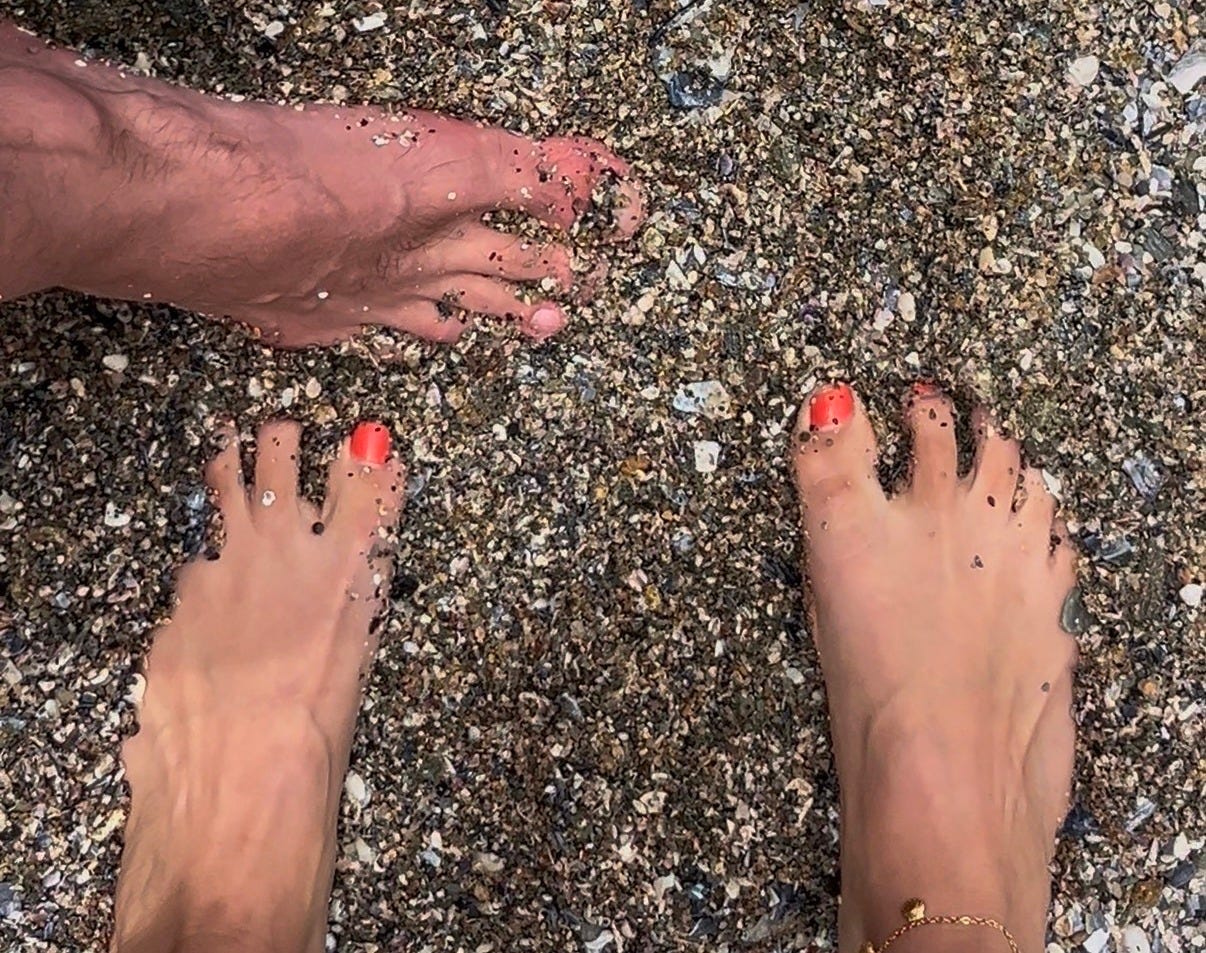
Shoes and I were never close as a kid. Snow on the ground, my grandma standing at the door pleading with me, none of it mattered. Bare feet against the earth just felt like the correct way to exist, in a way six-year-old me had no words for. Whole afternoons disappeared in the sandbox. One memory keeps resurfacing on its own: my brothers and I hosing the sandbox into a flood, narrating some Land Before Time-style disaster, mud everywhere, fully feral, fully thrilled.
Gardening picked up that thread later in life. Somewhere in my teenage years I decided I hated it, mostly because my parents loved it and rebellion needed a target. By my twenties the pull came back in full. These days my small LA apartment has plants wedged onto every surface, in and out, and working the dirt is still one of the quickest routes I know to actually exhale. My mom tells me she’d park me in a baby seat beside her while she gardened, and I’d just sit there watching, completely at ease. I believe her, because that same magnetic pull is still there. A forest-walk video crosses my feed and I’m watching the whole thing, every single time.
Life Gets in the Way
Honest confession: most days, none of that actually happens. A workday shows up, an inbox fills, there’s a to-do list, dinner needs making, the apartment needs attention, and the outdoors quietly gets left off the list. That’s not a character flaw. That’s just what a packed life does when nobody’s watching.
Consider this less a lecture, more a gentle push: five minutes outside, feet on real ground, might be doing more for your head than it gets credit for. Here’s the reasoning behind that.
What’s Actually Happening When Your Feet Touch the Ground
The evidence here is still early-stage, but it’s more substantial than I expected going in.
A handful of peer-reviewed studies on earthing, the term researchers use for direct skin contact with the ground, point to measurable shifts: nighttime cortisol dropping and re-regulating, sleep improving, inflammation markers easing. One early trial had participants sleep grounded for eight weeks and documented their cortisol rhythms drifting back toward a healthy pattern. Sample sizes stay small, and the field needs larger trials before anyone calls this settled, but the direction holds steady across studies: contact with the earth appears to nudge the body out of stress mode and toward parasympathetic, rest-and-digest territory.
Then there’s the dirt itself. A soil bacterium, Mycobacterium vaccae, turns up in some genuinely compelling research, mostly in animal models so far. Mice exposed to it picked up tasks faster, showed less anxious behavior, and cleared mazes at roughly double the speed of unexposed mice. Researchers traced it to serotonin-producing neurons switching on in a mood-related brain region. Human data stays thin, but “getting your hands dirty” stopped feeling like just a phrase to me. Something literal might be happening under those fingernails.
Why Every Ashram Makes You Take Your Shoes Off
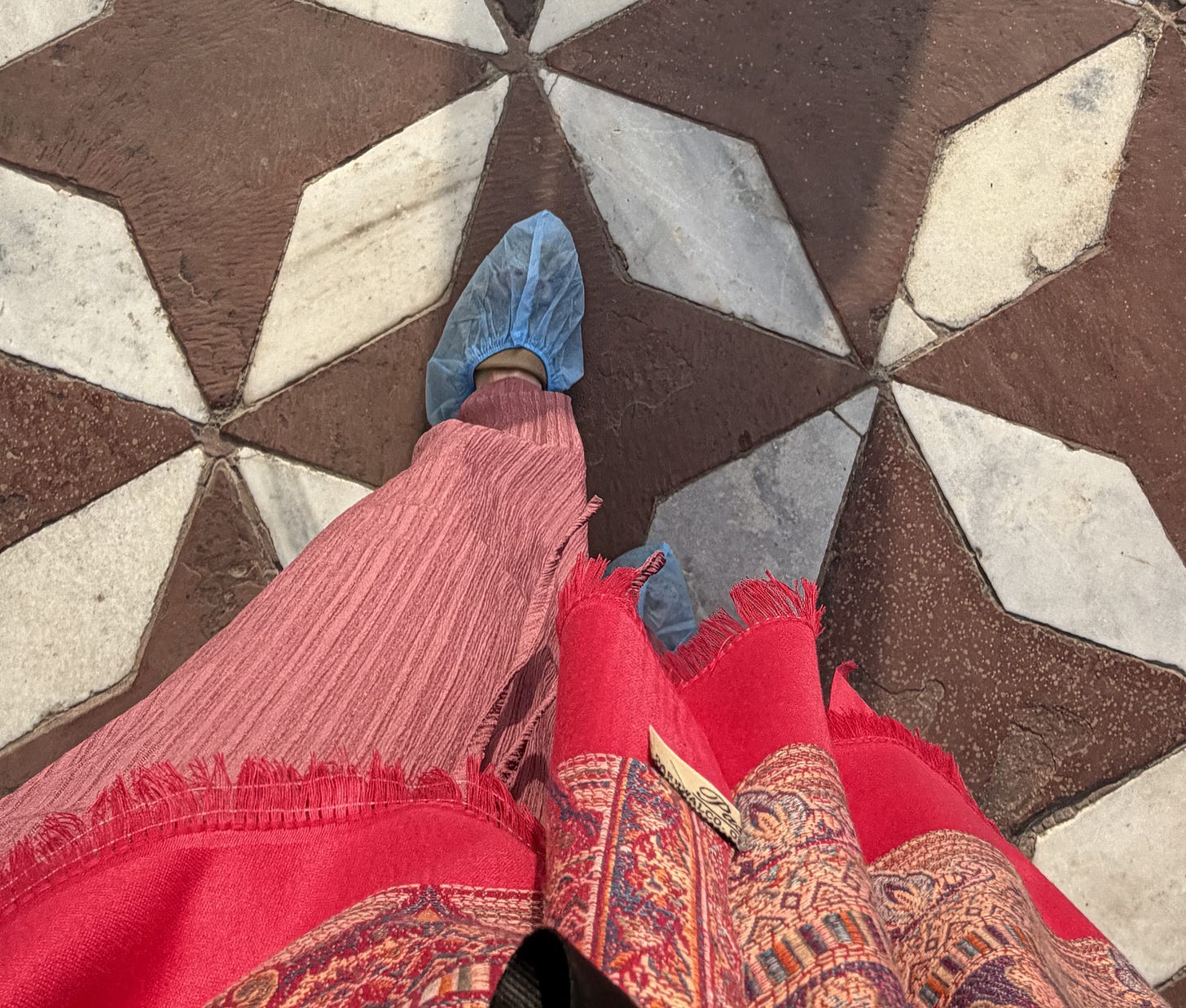
Yoga spaces aren’t unique here, temples, mosques, and plenty of homes across cultures ask the same of you, and it’s worth pausing on why. Part of it is plain cleanliness, keeping a shared floor free of whatever the outside world dragged in. But there’s also, I think, a small physical ritual buried in it: something gets left at the door along with the shoes. You walk in more exposed, more present, feet making actual contact with the ground you’re about to practice on.
Which lines right up with the root chakra, muladhara in Sanskrit, mula for root, adhara for support. It sits at the base of the spine, tied to the earth element: stability, safety, trust that whatever’s underneath you will actually hold. Its bija mantra, LAM, is a deliberately low, grounded sound. Nobody chants a root chakra tone in a high, airy register. It stays low, in the same register a gong lives in.
The Low Hum Does Something Too
This is where my own work enters the picture, and it’s no accident that sound healing leans so heavily on low, sustained tones. Gongs and low singing bowls sit roughly in the 40 to 150 Hz range, and real research points to that range interacting with the vagus nerve, the primary channel running through your parasympathetic nervous system. The low rumble appears to pull brainwave activity toward a theta state, the same relaxed register deep meditation drops you into.
Worth being upfront about the open question too: it’s not entirely settled whether the vibration itself is doing something unique, or whether a gong is simply an unusually good delivery system for the same relaxation response slow breathing or calming music produces. Either explanation lands in the same practical place, low, sustained sound reliably brings people into a more grounded state, whatever the underlying mechanism turns out to be.
The Hike That Made Me Take My Shoes Off
On a recent family trip near Zion, out on a hike with my brothers, I looked down mid-trail and realized both of them, mid-thirties, parents themselves, the exact people who tell their own kids to keep shoes on so nobody steps on glass, were walking completely barefoot. I glanced at my own boots, glanced back at them, and took mine off too.
The sand gave in a way I hadn’t braced for. Something about the hike sharpened, more awareness of the ground, the shifting temperature, the texture changing with each step. Did I have to hose my feet off afterward? Absolutely. Worth it regardless? Also absolutely.
One necessary caveat before anyone gets ideas: this isn’t a no-shoes-no-shirt-still-expect-service situation. We function within a society, sidewalks have glass on them, rules exist for reasons. This isn’t an argument for becoming a public hazard. It’s an argument for the actual grass sitting right there in the actual park. Separate but equally sincere point: socks at the beach genuinely unsettle me. If that’s you, no judgment, truly, but I’m hoping you’ll shed them by the time you finish reading this.
Watch the video in the original post on Substack
Where to Go From Here
If any of this made you want to kick your shoes off right now, good, that’s the whole point, go the f outside and maybe meditate with me, even if its just 5 minutes:
Free sessions on YouTube: This is where I’m building a library of guided sound baths, meditations, and breathwork you can return to again and again. Before bed, when you’re overwhelmed, when you need ten minutes that are actually yours. Subscribe and it will be waiting for you whenever you need it. youtube.com/peacefulplacewellness
Bring it to your space: Private sound baths and corporate wellness events are my favorite thing to do. I come to you, whether that’s your home, your office, a retreat, or an event, and low, grounding tones are always part of it. Fill out this form and let’s put something together.
Attend a class: I teach sound baths and yoga nidra at studios across Los Angeles, including Ceremny in Marina Del Rey. Come feel what a low gong actually does to a room. See the full schedule at angelawrightmusic.com/classes-schedule.
This essay first appeared on my Substack. Subscribe for new writing on sound, rest and the nervous system.
Subscribe on Substack