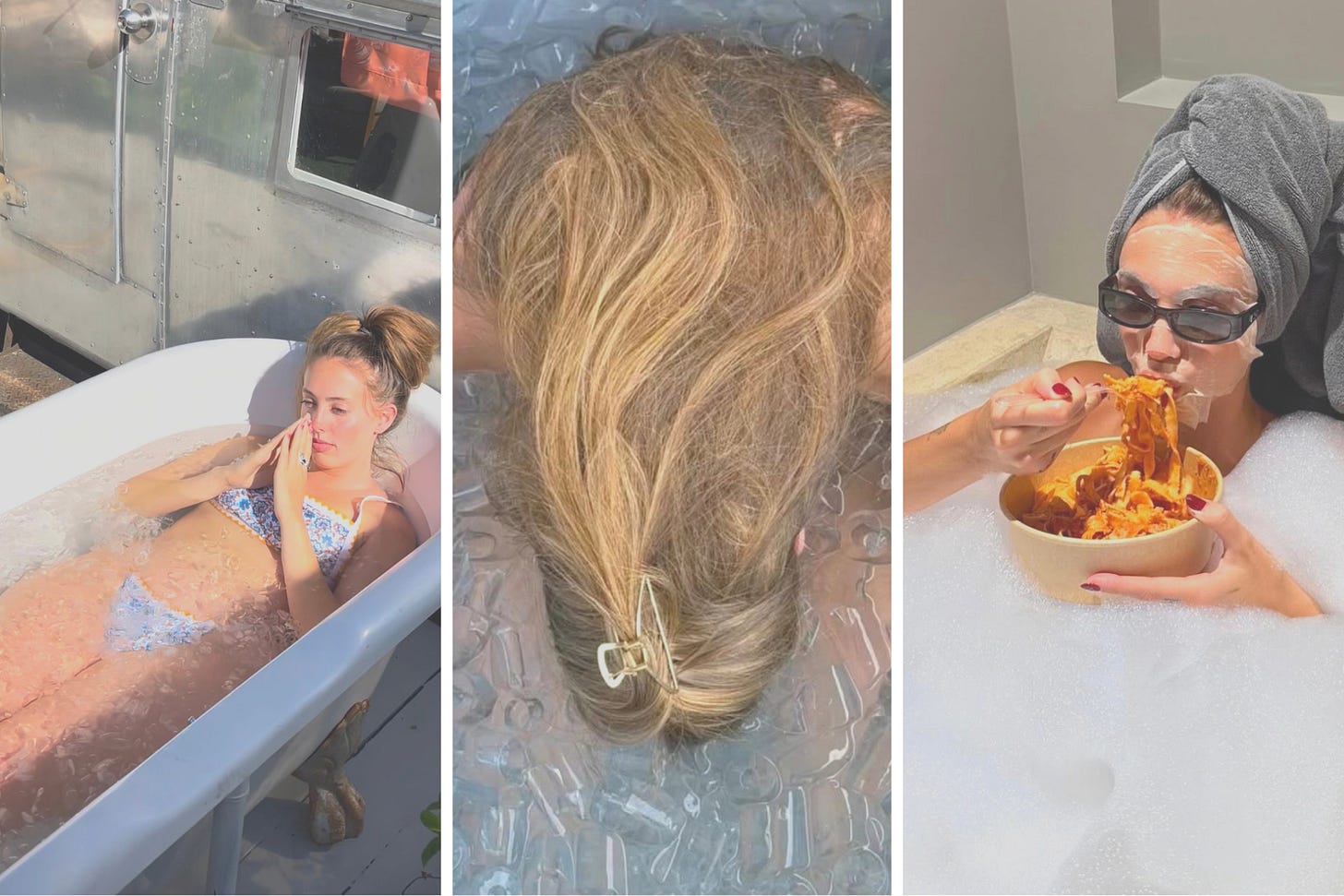
Open any wellness app or instagram right now and you’ll find someone standing in a tub of ice water, timing themselves, talking about dopamine and discipline. Cold plunging has become shorthand for taking your health seriously. Meanwhile, the person who takes a nap or skips their workout because their body asked them to gets called lazy, or worse, “not committed.”
I want to push back on that, not because cold exposure doesn’t work, but because the way it’s being sold flattens something important: your body is not the same body every day of the month, and the wellness industry has built an entire category of tools as if it were.
Read the full articleClose article
What cold exposure actually does
Cold exposure spikes cortisol and norepinephrine, your body’s primary stress hormones, before your parasympathetic system kicks in and brings you back down. That spike-and-recover pattern is exactly why it can build resilience over time, done at the right dose, at the right time. But “the right time” is doing a lot of work in that sentence, and it’s the part almost nobody mentions.
Research on sex differences in stress physiology (Kajantie & Phillips, 2006, Psychoneuroendocrinology) shows that women’s cortisol reactivity shifts meaningfully across the menstrual cycle, generally running higher in the luteal phase, the one to two weeks before your period, when progesterone is dropping and your nervous system is already working harder to stay regulated. Add a hard cortisol spike from cold water on top of that, and you’re not building resilience. You’re adding stress to a system that’s already asking for less.
Many women’s health practitioners, including exercise physiologist Dr. Stacy Sims, have pointed to the follicular phase, roughly the week after your period through ovulation, as the window where your body tends to handle high-stress inputs like cold exposure and intense training with more resilience. It’s not a universal rule and every cycle is different, but it’s a far more useful starting point than “do it every day no matter what.”
Why rest doesn’t get the same credit
This is the part of the pattern I recognize in myself. For years, I confused doing something hard with doing something good for me. My body was giving me real signals, exhaustion, inflammation, hormonal shifts that didn’t make sense until I actually listened, and for a long time I overrode all of it because rest didn’t feel like it “counted.” It took real health issues to teach me that my body was communicating, not betraying me, and that ignoring the message doesn’t make you disciplined. It makes you disconnected.
Rest is not the opposite of a biohack. It’s one, just an unglamorous one. Deep, intentional rest activates the same parasympathetic recovery system that cold plunging is trying to train, without the added cortisol spike. For a body that’s already in a higher-stress phase of its cycle, that’s not a downgrade. It’s the more effective tool.
The toolkit: working with your body instead of against it
Track where you are in your cycle before you plan hard interventions. You don’t need an app or a science degree, just a rough sense of whether you’re in the week after your period (generally more resilient) or the week before it (generally more taxed).
Save cold exposure for the follicular phase, if you use it at all. This is where your body tends to tolerate a stress-then-recover cycle best. It’s not a rule carved in stone, it’s a starting point to test against how you actually feel.
Choose warmth and stillness during the luteal phase. A sound bath or a yoga nidra session activates the same parasympathetic recovery cold plunging is chasing, without the cortisol spike, which makes it a better match for a week when your system is already working harder.
Let your breath do the regulating on the hard days. A long, slow exhale, four counts in, six to eight counts out, lowers your heart rate directly, no ice required.
One thing to do right now
Before your next cold plunge, ask one question: what week of my cycle am I in? Not to talk yourself out of it. Just to actually choose it, instead of defaulting to it.
Where to Go From Here
If your body’s been asking for warmth and stillness instead of another stress test, that’s not a failure of discipline. That’s information.
Free sessions on YouTube: This is where Angela is building her library of guided sound baths, meditations, and breathwork you can return to again and again. Before bed, when you’re overwhelmed, when you need ten minutes that are actually yours. Subscribe and it will be waiting for you whenever you need it. youtube.com/peacefulplacewellness
Bring it to your space: Private sound baths and corporate wellness events are Angela’s favorite thing to do. She comes to you, whether that’s your home, your office, a retreat, or an event. Fill out this form and she’ll put something together with you.
Attend a class: Angela teaches sound baths and yoga nidra at studios across Los Angeles, built around real recovery. See the full schedule at angelawrightmusic.com/classes-schedule
This essay first appeared on my Substack. Subscribe for new writing on sound, rest and the nervous system.
Subscribe on Substack